Forty Years: The History of Women at Bowdoin

A Class Project of GWS 280 - Fall 2011

  • Prehistory
  • Process
  • Curriculum
  • Athletics
  • Extracurriculars
  • Social Life & Fraternities
  • Women’s Resource Center
  • Timeline

Memorandum to President Howell

In considering the transition to coeducation, colleges and universities around the United States began to reflect on the many changes that would occur or be required in admitting the “opposite sex”. Prospective changes included those to living facilities and dormitories, dining halls, infirmary and athletic buildings, and notably, college curricula. Bowdoin addressed the anticipation of women entering the student body by creating an Ad Hoc Committee on Coeducation. The role of the subcommittee was to examine the various changes within the aforementioned areas that would result due to women’s admission.

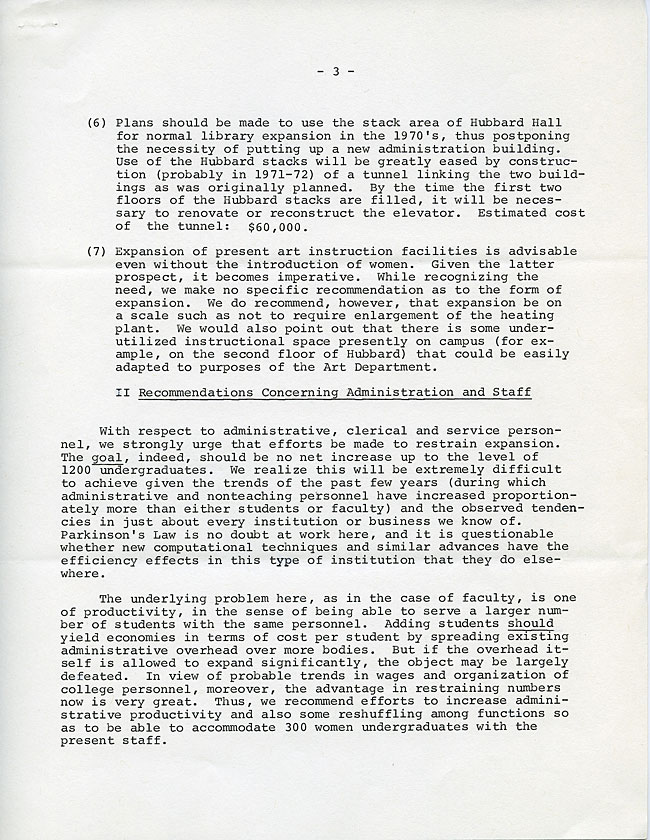
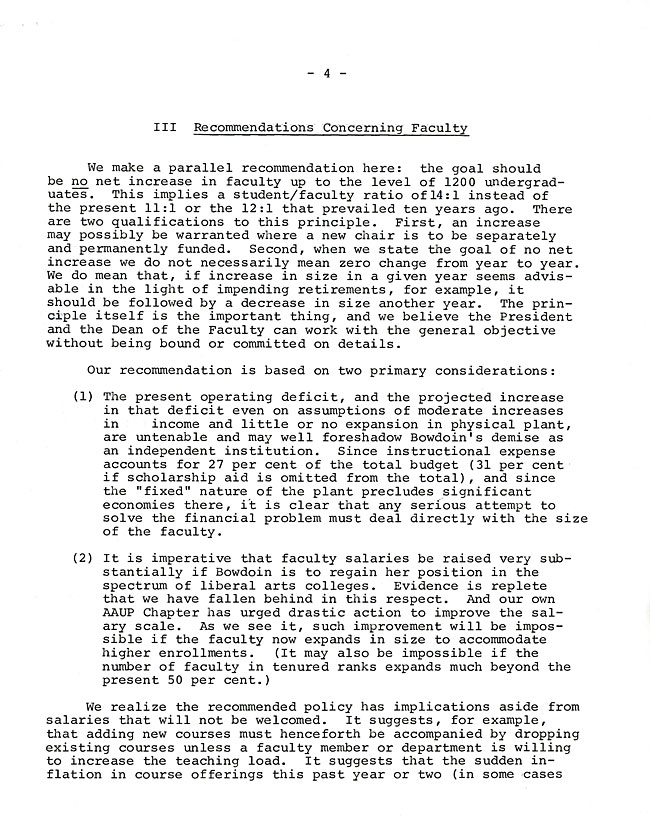
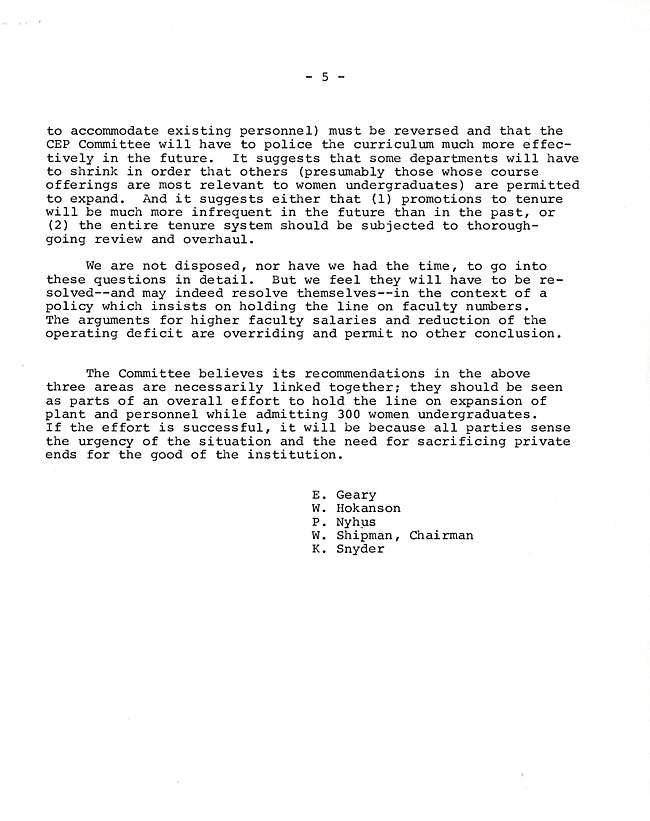
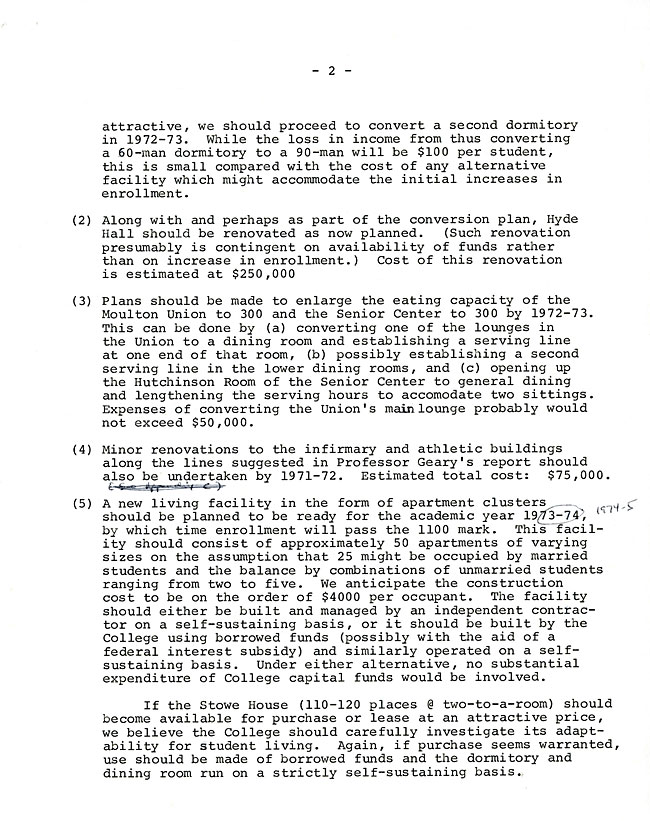
Like many of its collegiate and university counterparts, Bowdoin anticipated specific curricular modifications that the entrance of women would necessitate. On August 26, 1970, the Ad Hoc Committee wrote this memorandum (Document SW, 32) to President Howell to discuss the introduction of 300 undergraduate women in two stages, and in particular, to address the changes for both faculty and staff, and academic buildings they felt the entrance of women would require.

Akin to the views of other higher educational institutions at the time, the Ad Hoc Committee asserts that an increase in faculty members was not initially necessary. Rather they contend that a greater monitoring of the curriculum provisions by the Curriculum and Education Policy (C.E.P.) committee is needed since they believe the admission of women would lead not only to a general “inflation in course offerings” but also to the reduction of various academic departments such that “others (presumably those who course offerings are most relevant to women undergraduates) [would be] permitted to expand.” The Ad Hoc Committee also suggests the expansion of the current art instruction facilities is “advisable” regardless of the introduction of women but “imperative” given their anticipated admission.
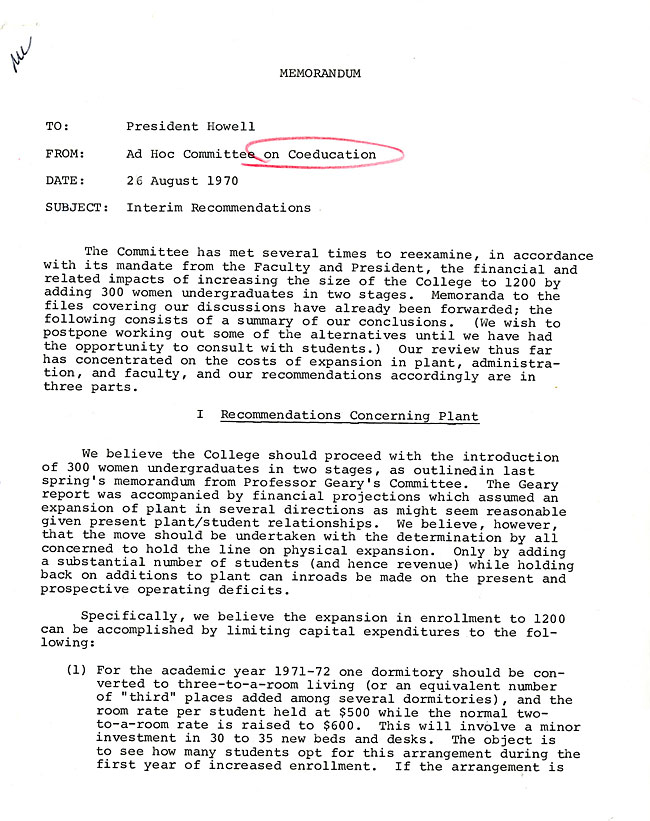
SW32 - Page 1 - Memorandum to President Howell
SW32 - Page 2 - Memorandum to President Howell
SW32 - Page 3 - Memorandum to President Howell
SW32 - Page 4 - Memorandum to President Howell
SW32 - Page 5 - Memorandum to President Howell

Filed Under: Curriculum, Documents Tagged With: 1970, Ad Hoc Committee on Coeducation, CEP, Curriculum and Education Policy, Memorandum, President Howell, SW32

Orient: Greason Attacks

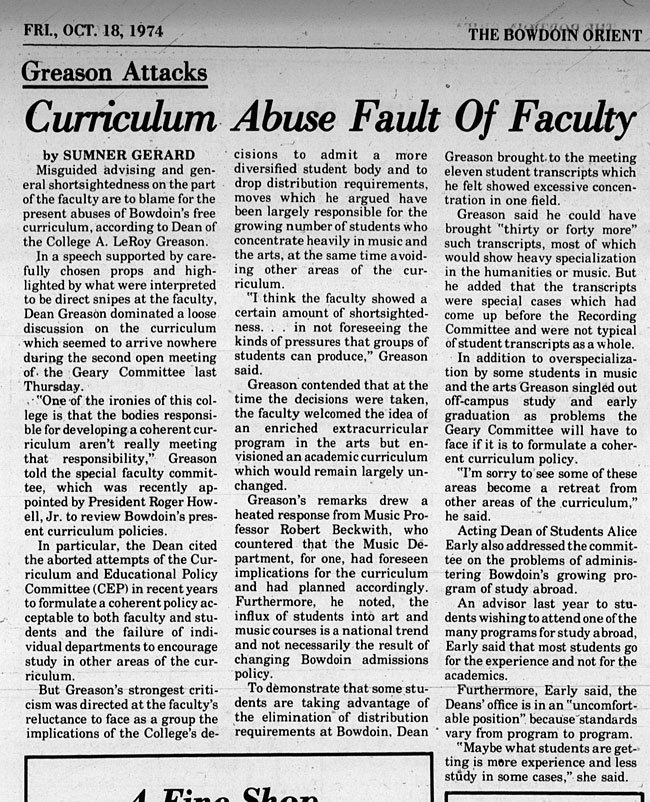
In 1969, two years prior to the admission of women to the College, Bowdoin decided to drop its distribution requirements. After that decision, and then in light of the transition to coeducation, Bowdoin’s curriculum underwent significant scrutiny in the early 1970s. In this Orient article, (Document SW, 34), the author documents Dean of the College, A. LeRoy Greason’s argument that the “faculty are to blame for the [at the time] present abuses of Bowdoin’s free curriculum,” a curriculum he felt had no “coherent policy acceptable to both faculty and students.”

The author notes that Greason’s argument concerning the curriculum is particularly relevant to, if not rooted in, Bowdoin’s recent transition to coeducation. The author writes that “Greason’s strongest criticism” concerned the faculty’s inability to confront the “implications of the College’s decisions to admit a more diversified student body and to drop distribution requirements.” Greason asserts that the combination of these two decisions is responsible for the “growing number of students who concentrate heavily in music and the arts” and avoid “other areas of the curriculum.” Consequently, Greason contends that in failing to develop a “coherent curriculum,” or a curriculum that mandates taking classes in a variety of disciplines, the faculty is essentially preventing the student body from receiving the true breadth of focus a liberal arts education should warrant.

In general, Greason’s argument that the faculty has failed to address the curricular effects of dropping the distribution requirements and recently admitting women demonstrates one of the ways Bowdoin’s shift to coeducation complicated the College’s understanding of how to best and appropriately provide a diverse liberal arts education. Although Bowdoin did not reverse its move toward coeducation, it did retract its decision to drop distribution requirements. Currently, however, male and female students at Bowdoin must take courses in five different distribution areas in order to graduate.

SW34 - Orient: Greason Attacks

Filed Under: Curriculum, Documents Tagged With: 1974, A. LeRoy Greason, Greason, Orient, SW34

Survey of Data on Entering Freshmen

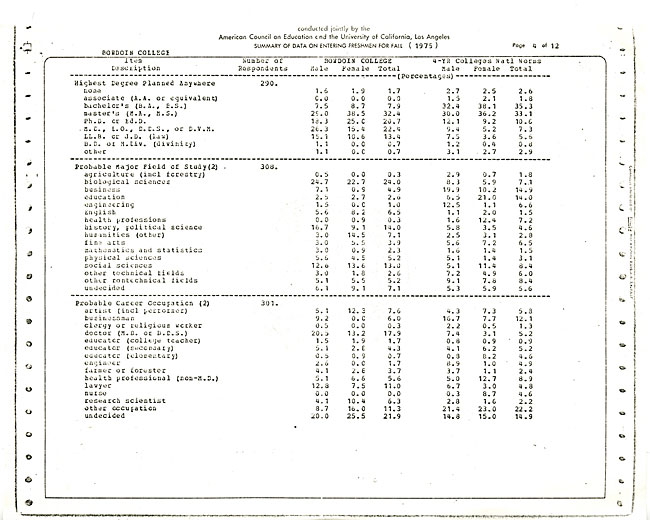
Since the end of World War I, many colleges and universities across the United States have recorded data on their incoming first-year classes. The surveys still in evidence at Bowdoin cover a wide range of topics including race, family educational background, religious preference, marital status, home location, and reasons for attending college. Until the early 1970s, the data Bowdoin collected was, for obvious reasons, not broken down by gender. In the fall of 1971, however, Bowdoin admitted its first coeducational class and began to tally responses according to sex. The page of the survey (Document SW, 35) presented here documents the probable major field of study and career occupation, for the incoming freshmen for fall of 1975.

In terms of likely major field of study, men and women make up similar percentages in the responses of biological sciences, education, physical sciences, social sciences, and other nontechnical fields. While men make up notably higher percentages in choosing business, history/political science, and mathematics and statistics, women make up notably higher percentages in selecting English, humanities, and undecided.

In terms of probable career occupation, men and women have similar percentages in indicating educator (college teacher), health professional (non M.D.), and farmer or forester. Men make up notably higher percentages in selecting businessman, doctor, and lawyer, while women make up notably higher percentages choosing artist, research assistant, and “other occupation”. It is also important to note that roughly 20% of male responses and 25% of female responses remain undecided.

As this survey data indicates, from the start of its transition to coeducation, the women who entered Bowdoin’s student body had a range of academic and career interests that they hoped to pursue while at, and after attending, the College.

SW35 - Survey of Data on Entering Freshmen

Filed Under: Curriculum, Documents Tagged With: 1971, Data, Entering Freshmen, Freshmen, Survey, SW35

Distribution Tables, Number of Freshmen and Courses Taken by Majors

Three years after the official announcement of Bowdoin’s transition to coeducation, specifically in August 1974, a committee entitled the Special Committee on the Curriculum began its operation. Although initially comprised of ten members and a consultant, by the time the data part of the report presented here was released, that is, on March 10, 1976, it was comprised of only seven regular members, three of whom were often absent. As a result of its dwindling numbers, the Special Committee was unable to make specific recommendations in every area of the curriculum in this report but still asserted its belief that the curriculum needs to “remain the object of on-going study and of periodic adjustments.”

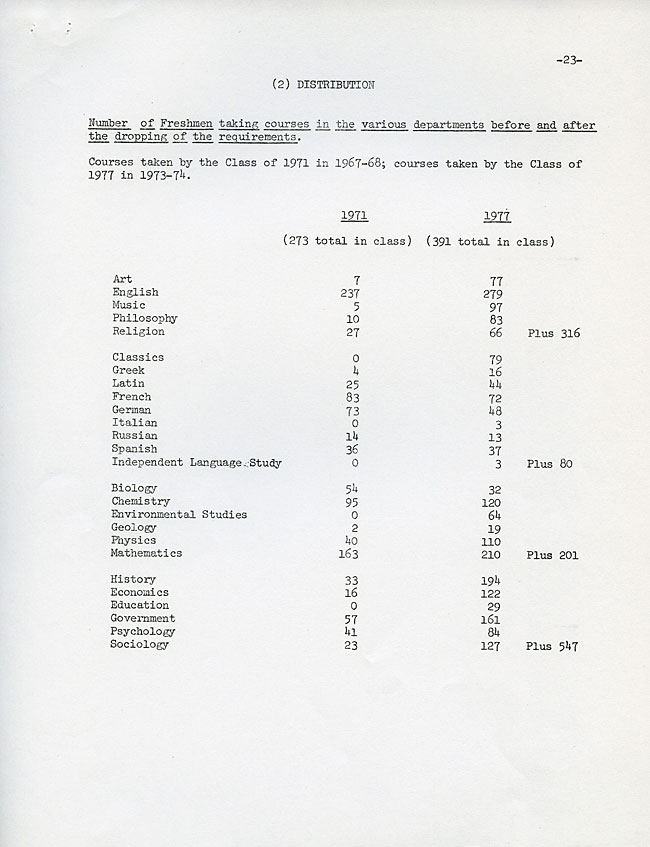
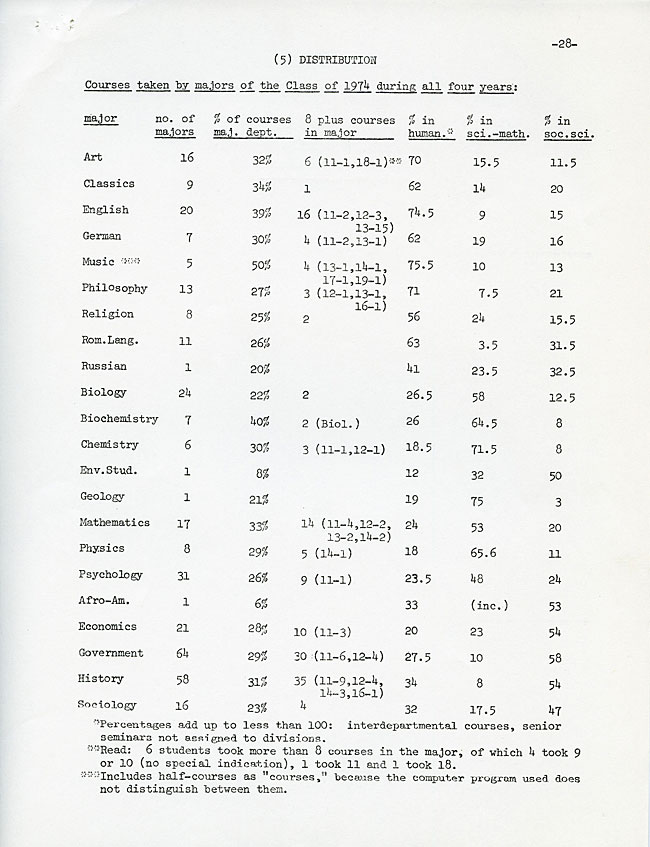
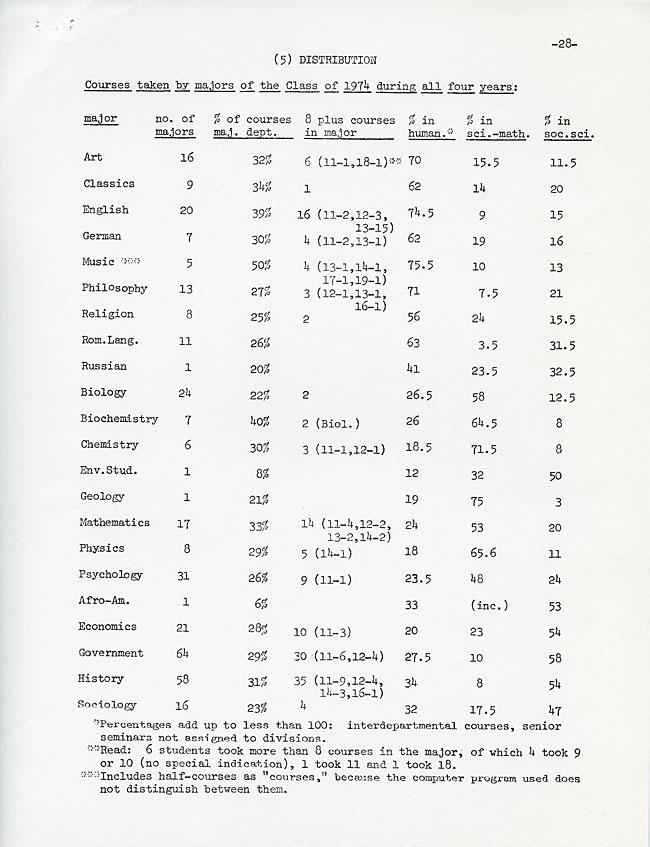
Within this thirty-page report, the Special Committee on the Curriculum addresses and makes recommendations on topics such as the “Liberal Arts Curriculum,” “Distribution and Requirements,” and a “Freshman-Sophomore Program” and provides various data tables pertaining to these subjects areas at the end of the report, including the two presented here. The first distribution table entitled, “Number of Freshmen…” (Document SW, 36.1), reveals that after the admission of women in 1971, in almost every single course area, except for French, German, Russian, and Biology, enrollment increased, if not substantially so, by 1974. The second distribution table entitled, “Courses taken by majors…” (Document SW, 36.2), reveals that, after three years of women’s admission to Bowdoin, the dominant majors were Government, History, Psychology, Biology and English, and that students were still taking a relatively equal amount of courses outside their majors.

Thus, although Bowdoin anticipated many curricular modifications occurring as a result of women’s admission to the College, as these distribution tables expose, very few changes actually took place besides a general increase in class enrollments.

SW36.1 Distribution Table, Number of Freshmen


SW36.2 - Distribution Table, Number of Freshmen
SW36.2 -  Distribution Table, Courses Taken by Majors
SW36.2 - Distribution Table, Courses Taken by Majors

Filed Under: Curriculum, Documents Tagged With: 1971, 1974, 1976, Distribution Table, Freshmen, Majors, SW36.1, SW36.2

Masque and Gown Photos – 1920 – 1924 – 1960 – 1976

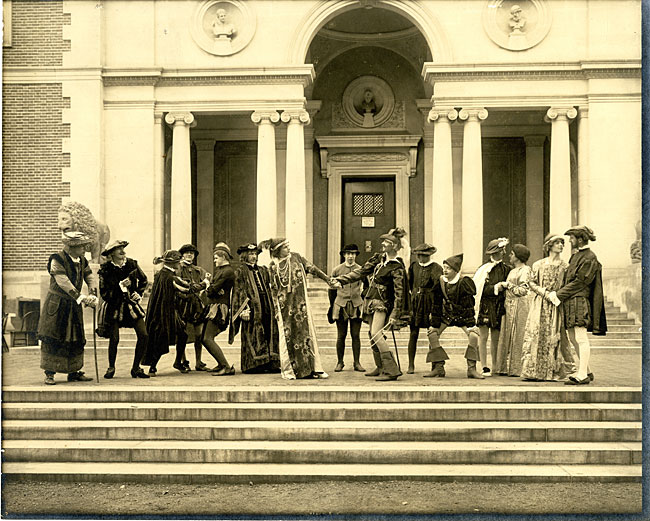
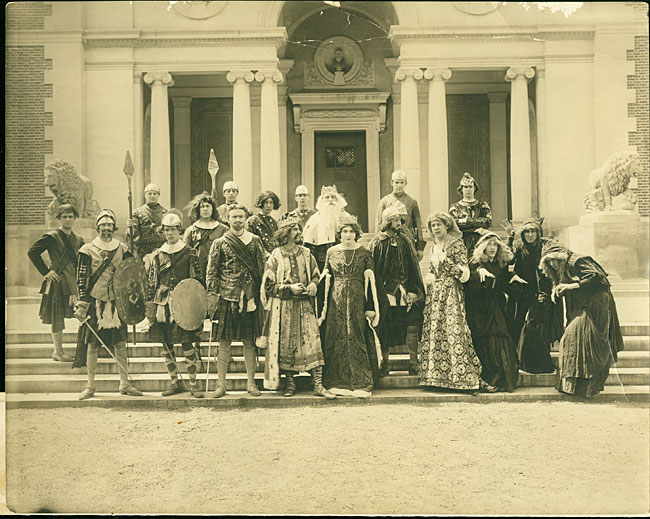
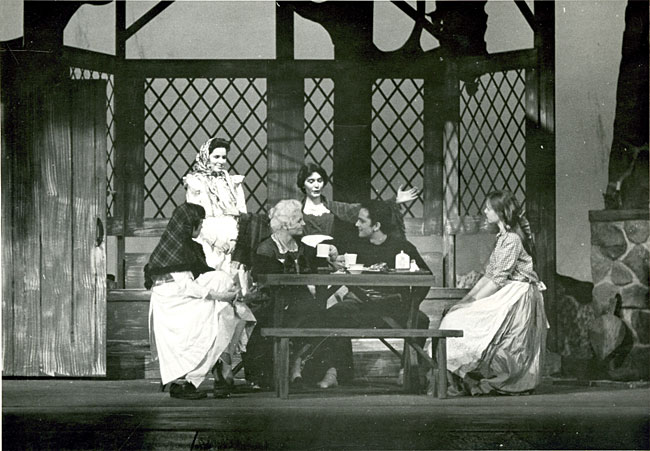
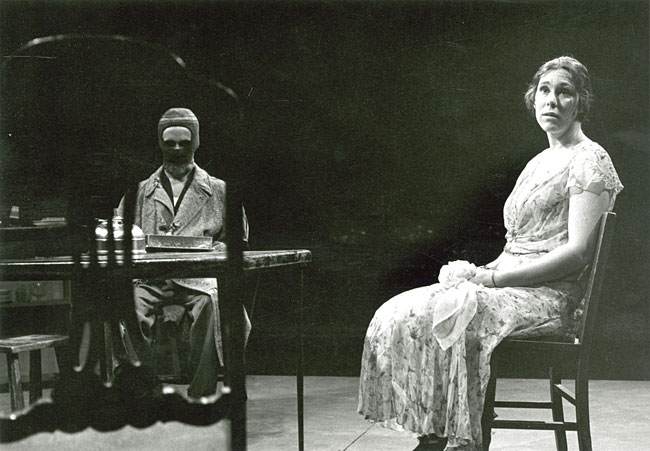
A visual documentation of Bowdoin’s progression from an all-male college to a coeducational one can be found in the archives of Masque and Gown. Masque and Gown is a student run theater organization founded in 1903, sixty eight years before the arrival of women students on campus.  The photos featured here illustrate Masque and Gown at three distinct points in time: when the college was an all-male institution, when the Masque and Gown began casting Brunswick women in female roles, and when the College became a coeducational institution.

AG37.1 - Masque and Gown Photo  (1920 Merchant of Venice)
AG37.1 - Masque and Gown Photo (1920 Merchant of Venice)

The first two photos [DocumentAG, 37.1 and DocumentAG, 37.2] are group shots from a 1920 production of The Merchant of Venice and a 1924 production of Macbeth. These photos were taken in the years when Masque and Gown productions consisted of all male casts. In 1927 Masque and Gown began casting Brunswick women in female roles, with a few exceptions.

AG37.2 - Masque and Gown Photo  (1924 MacBeth)
AG37.2 - Masque and Gown Photo (1924 MacBeth)

Eventually, Masque and Gown also allowed Bowdoin female staff members and faculty wives to participate in their productions.  Edith Elliott, a Registered Nurse at the Bowdoin infirmary appeared as the only female in the 1937 production of Yellow Jack. The third image [DocumentAG, 37.3] shows women of the Brunswick community in the 1960 production of Playboy of the Western World. Although the names of the five women in the image are not specified, the female roles in the play are as follows. Four village girls: Susan Brady, Nelly Leahy, Honor Blake, and Sara Tansey played by Betsi Black, Cecilia Stehle, Paula Black, and Linda Sarkis respectively,  Margaret Flaherty played by Paula DeCaesar and Widow Quin played by Irma Black.

AG37.3 - Masque and Gown Photo   (1960 Player of the Western World)
AG37.3 - Masque and Gown Photo (1960 Player of the Western World)

The final photo [DocumentAG, 37.4] is of the 1976 production of A Slight Ache. The  particularly small cast is made up of only Bowdoin students. Brunswick women and faculty wives were eventually phased out as actresses in Masque and Gown plays and female students became the primary actresses in campus productions.

AG37.4 - Masque and Gown Photo (1976 A Slight Ache)

The inclusion of women of the Brunswick community as well as the participation of female staff members and faculty wives raises an interesting question: When and to what degree did women become members of the Bowdoin community? Women were not students until the 1970’s, yet before coeducation, women participated in college programs and found ways of creating communities with other women through Bowdoin. An excellent example of such a group of women is the Society of Bowdoin Women. The Society began in the 1920’s and its members consisted of women in the Brunswick community, women staff members, and faculty wives, with the only requirement for membership being that “she love a Bowdoin man.” Theodora Penny Martin suggests in “On the Outskirts: A Case Study for Kin Work in Academe” that such a society allowed women to become a part of the Bowdoin community by “defin[ing] herself in the tradition of her family”. Similarly the women who participated in Masque and Gown productions post 1927 and before coeducation were, if only for a short amount of time, part of the Bowdoin community.

Filed Under: Documents, Extracurriculars Tagged With: 1920, 1924, 1960, 1976, A Slight Ache, AG37.1, AG37.2, AG37.3, MacBeth, Masque and Gown, Merchant of Venice, Photo, Player of the Western World

  • « Previous Page
  • 1
  • …
  • 4
  • 5
  • 6
  • 7
  • 8
  • …
  • 17
  • Next Page »

Categories

  • Athletics (9)
    • Documents (6)
    • Focus Group (1)
    • Oral History Interview (2)
  • Curriculum (8)
    • Documents (6)
    • Focus Group (1)
    • Oral History Interview (1)
  • Extracurriculars (10)
    • Documents (6)
    • Oral History Interview (3)
  • Prehistory (20)
    • Documents (18)
    • Oral History Interview (2)
  • Process (22)
    • Documents (12)
    • Focus Group (3)
    • Oral History Interview (7)
  • Social Life & Fraternities (20)
    • Documents (12)
    • Focus Group (3)
    • Oral History Interview (5)
  • Women’s Resource Center (8)
    • Documents (6)
    • Focus Group (1)
    • Oral History Interview (1)
  • Sources
  • Acknowledgments

Copyright © 2026 · research.bowdoin.edu · Powered by WordPress