Forty Years: The History of Women at Bowdoin

A Class Project of GWS 280 - Fall 2011

  • Prehistory
  • Process
  • Curriculum
  • Athletics
  • Extracurriculars
  • Social Life & Fraternities
  • Women’s Resource Center
  • Timeline

Orient Article: Women’s Sports Expand to Seven

In this December, 1973 article (Document JH, 57), Debbie Swiss discusses the growth of women’s athletics at Bowdoin since their introduction in 1971. She demonstrates the initial small number of women participating in some athletics at the College, explaining for example, that the women’s swimming program was under scrutiny because of a lack of participation. One interesting problem women athletes faced was a lack of competitions; women’s teams played against the Brunswick Women’s Recreation Center and Brunswick High School, rather than against other colleges. Coaches also faced high demands, as they were often responsible for scheduling games that were to be played with little practice time beforehand. Even so, a willingness on the part of the coaches and players rings clear throughout the article.
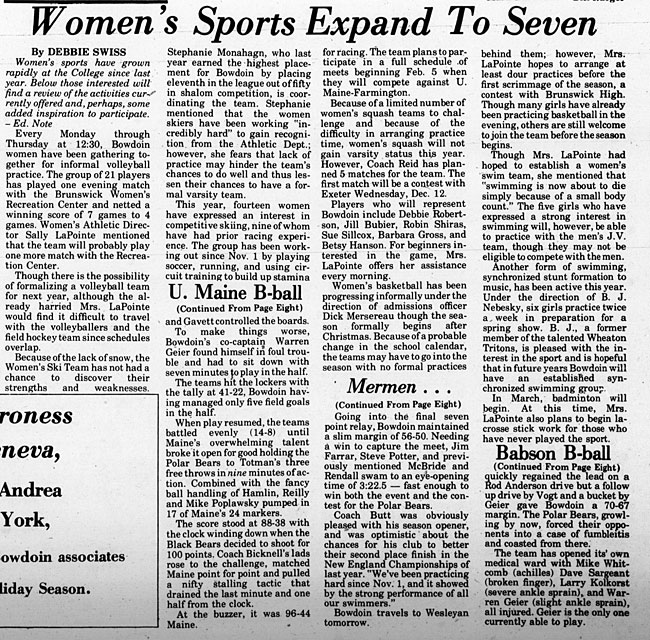
JH57 - Orient Article: Women's Sports Expand to Seven


Filed Under: Athletics, Documents Tagged With: 1973, Debbie Swiss, JH57, Orient

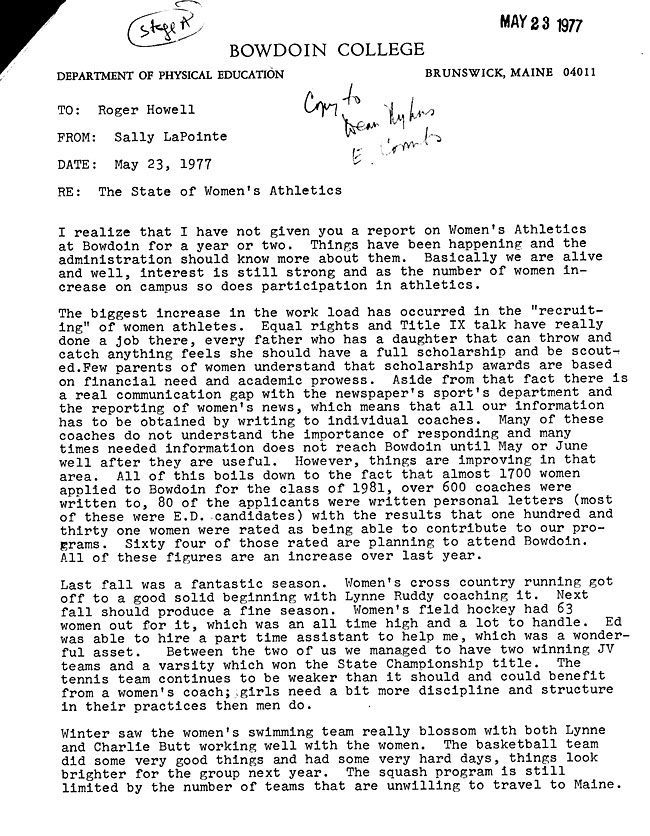
Letter from Sally LaPointe to President Howell

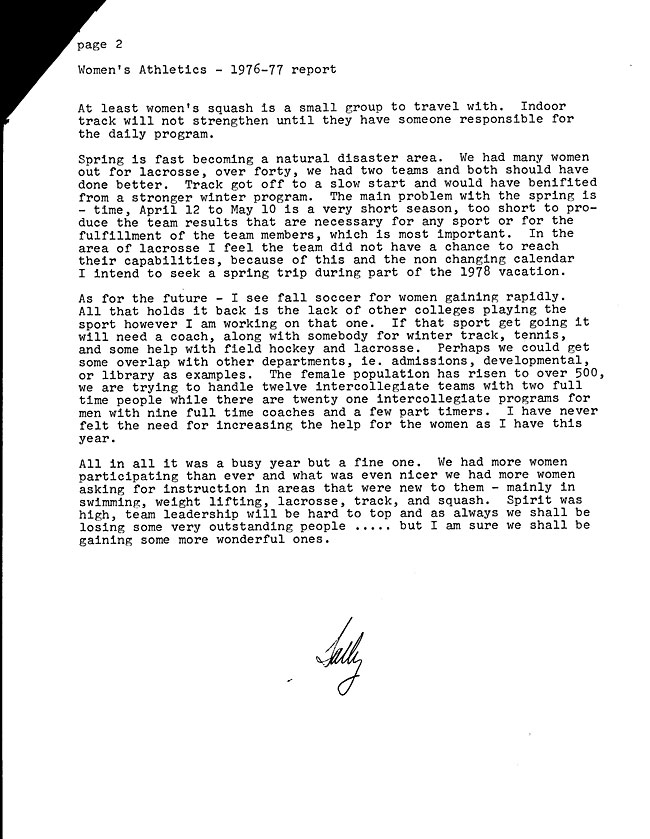
The first women’s coach at Bowdoin, and supervisor of the women’s athletic program, Sally LaPointe, wrote this letter regarding the condition of women’s sports in May of 1977, about six years after the College first admitted women (Document JH, 58). It seemed to be LaPointe’s responsibility to update the president on the status of women’s athletics annually, or bi-annually. She alludes to the impact of equal rights and Title IX—implemented in 1972, just after coeducation started at Bowdoin—on women’s athletics (see http://www2.ed.gov/about/offices/list/ocr/docs/interath.html for more information). That is, Title IX resulted in more women participating in sports before college, which, in turn, meant more women wanted to be athletes at the College.
LaPointe comments on fall, winter, and spring teams, and praises the athletes for their efforts. However, she notes the necessity for more female coaches and assistant coaches because of the large number of participants, which had increased drastically since the President’s Commission of 1972. LaPointe concludes by applauding the women for their contribution to the College, for their hard work, and for their spirit during their respective seasons.
President Howell responds to LaPointe (document available in Special Collections at Bowdoin) thanking her for the report, but offers no evidence or promises of immediate action to be taken to fulfill her requests.

JH58 Page 1 -  Letter from Sally LaPointe to President Howell
JH58 Page 1 – Letter from Sally LaPointe to President Howell
JH58 Page 2 -  Letter from Sally LaPointe to President Howell
JH58 Page 2 – Letter from Sally LaPointe to President Howell

Filed Under: Athletics, Documents Tagged With: 1977, Letter, President Howell, Sally LaPointe, Title IX

Letter from the Indoor Track Team and Letter from Dick Mersereau

The following series of documents represents requests made by women’s sports teams during the late 1970s. Evidence from the letters shows that concerns that emerged in LaPointe’s 1977 review of women’s athletics remained unresolved but that women athletes, and coaches of women continued to ask for support.

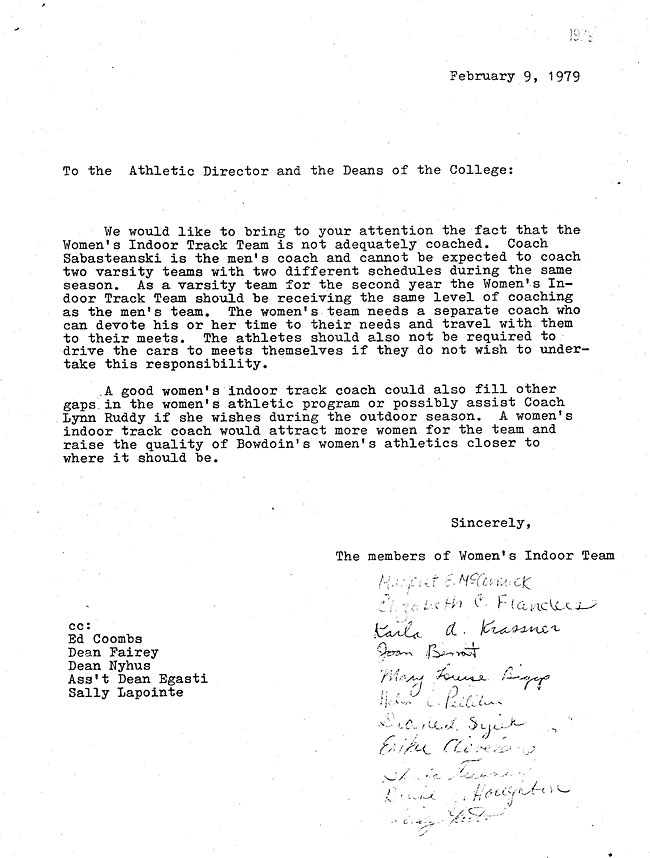
The women’s indoor track team wrote the first letter to the Athletic Director and the Deans of the College on February 9, 1979 (Document JH, 59.1). The team suggests that the men’s coach, Frank Sabasteanski, possessed too much responsibility in coaching both teams. In addition, they argue that a women’s coach would be more appealing for female students, and would also be able to work in other areas of the athletic department. The letter demonstrates the team’s desire for equality between men and women’s teams. Members of the team signed the letter and carbon copied Athletic Director Ed Coombs, three deans, and Sally LaPointe, the first female coach at the College.

A response, written on March 5, 1979, to Athletic Director Coombs from Dean Paul Nyhus (document available in Special Collections at Bowdoin) insisted that Coombs reply to the team and fulfill their request by the upcoming (1980) school year. However, today, forty years later, there is still one coach for men and women’s track, Peter Slovenski.

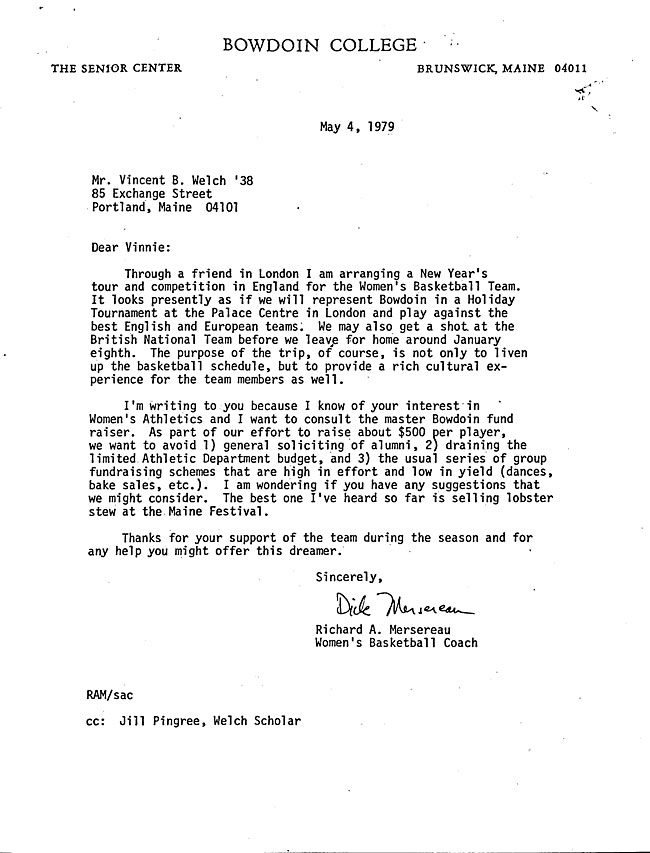
Richard (Dick) A. Mersereau (see interview, Part 2, 00:05:50), volunteer women’s basketball coach, wrote the second letter on May 4, 1979, to Vincent (Vinnie) B. Welch, a member of the Bowdoin class of 1938 (Document JH, 59.2). Mersereau requests that his team travel to London to play against European teams. Not only would this experience give his players a different type of competition to improve their skills, but it would also “provide a rich cultural experience.” Mersereau calculates the cost of $500 per player, and directs his request to Welch, a supporter of women’s athletics at the College, and, according to Mersereau, a successful fundraiser. Before closing the letter, Mersereau commented, “Thanks…for any help you might offer this dreamer,” suggesting he has little confidence that any women’s sports team at that time would be approved to do something as far-fetched as traveling to Europe.

Ten days later, on May 14, 1979, Welch forwarded the letter to C. Warren Ring, Vice President of Development at the College, who then sent a letter to President Enteman on May 18, 1979 (documents available in Special Collections at Bowdoin). Paralleling Mersereau’s dreamer quotation, Ring writes, “Mr. Welch, quite understandably, does not know how to answer Mr. Mersereau’s request.” Ring offers many questions that, in his opinion, need to be answered before taking further steps in planning a trip to London. The letter does not offer any conclusions; however, an interview with Mersereau revealed that a lack of funding did not permit the team’s trip.

JH59.1 - Letter from the Indoor Track Team
JH59.2 - Letter from Dick Mersereau

Filed Under: Athletics, Documents Tagged With: 1979, C. Warren Ring, Coach, Dick Mersereau, Ed Coombs, JH59.1, JH59.2, Letter, Mers, President Enteman, Richard Mersereau, Sally LaPointe, Track

Team Photographs

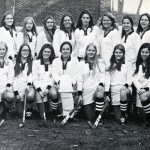
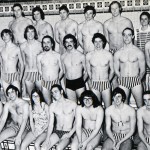
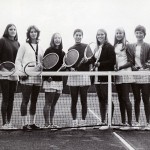
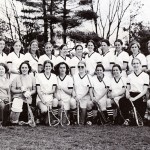
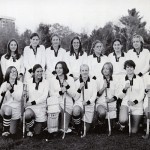
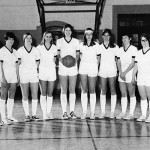
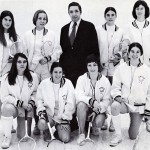
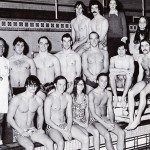
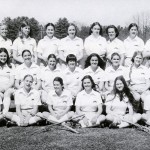
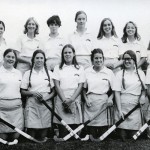
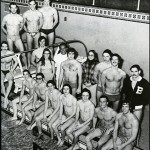
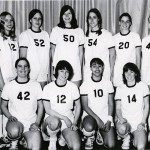
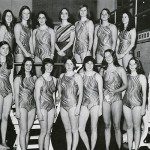
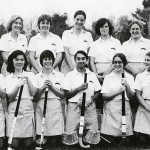
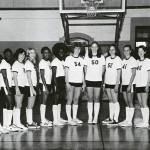
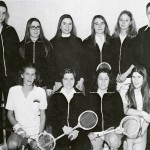
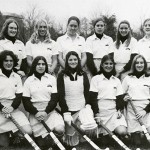
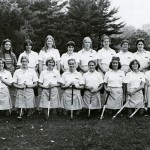
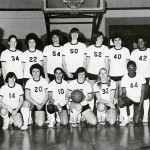
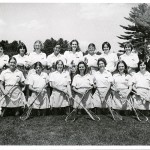
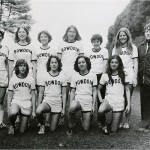
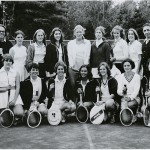
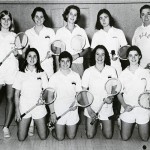
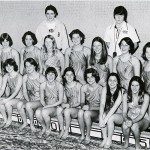
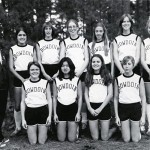
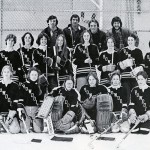
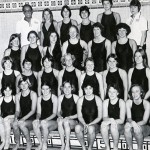
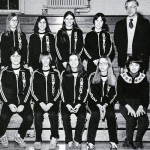
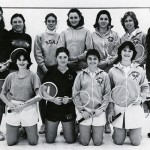
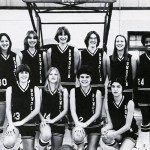
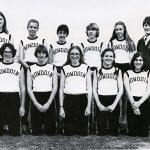
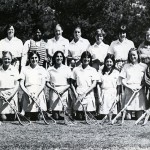
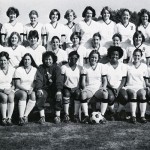
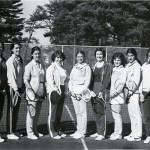
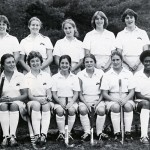
These photographs of women’s sports teams in the Bowdoin Bugle demonstrate the progress of women’s athletics over the span of the 1970’s. They illustrate the sports women played at and for the College, starting in 1972 with two varsity sports, field hockey and swimming (women were members of the men’s team), and increasing to ten teams by the 1978-79 academic year.

document-jh-60.1
document-jh-60.1
document-jh-60.2
document-jh-60.2
document-jh-60.3
document-jh-60.3
document-jh-60.4
document-jh-60.27

’71-’72: No yearbook photos of women’s teams

’72-’73: Field Hockey (20 women with Coach Sally LaPointe); 3 women included in the Men’s Swimming team photo with Coach Charlie Butt
(Documents JH, 60.1 and 60.2)

’73-’74: Tennis (8 women with Coach Edward Reid); Lacrosse (22 women with Coach Sally LaPointe); Field Hockey (14 women with Coach Sally LaPointe and her assistant); Basketball (10 women with Coach Sally LaPointe); Skiing (6 women); Squash (8 women with Coach Edward Reid); 3 women included in the Men’s Swimming team photo with Coach Charlie Butt
(Documents JH, 60.3, 60.4, 60.5, 60.6, 60.7 60.8, and 60.9)

’74-75: Lacrosse (25 women with Coach Sally LaPointe); Field Hockey (15 women with Coach Sally LaPointe); 2 women included in the Men’s Swimming team photo with Coach Charlie Butt; Basketball (11 women with Coach Sally LaPointe)
(Documents JH, 60.10, 60.11, 60.12, and 60.13)

’75-’76: Swimming (15 women with Coach Charlie Butt); Field Hockey (12 women with Coach Sally LaPointe); Basketball (15 women with Coach Richard Mersereau); Squash (9 women with Coach Edward Reid); JV Field Hockey (12 women with Coach Sally LaPointe)
(Documents JH, 60.14, 60.15, 60.16, 60.17, and 60.18)

’76-’77: Field Hockey (17 women with Coach Sally LaPointe); Basketball (13 women with Coach Richard Mersereau and his assistant); Lacrosse (15 women with Coach Sally LaPointe); Track (10 women with Coach Lynn Ruddy); Tennis (14 women with Coach Edward Reid and his assistant); Squash (8 women with Coach Edward Reid); Swimming (16 women)
(Documents JH, 60.19, 60.20, 60.21, 60.22, 60.23, 60.24, and 60.25)

’77-’78: No team photos, but teams represented include: Field Hockey, Sailing, Swimming, Track, Basketball, Tennis

’78-‘79: Cross Country (10 women with Coach Lynn Ruddy); Ice Hockey (14 women); Swimming (24 women with Coach Charlie Butt and Coach Lynn Ruddy); Indoor Track (9 women with Coach Frank Sabasteanski); Squash (10 women with Coach Edward Reid); Basketball (11 women with Coach Richard Mersereau); Outdoor Track (10 women with Coach Lynn Ruddy); Tennis (10 women with Coach Edward Reid); Field Hockey (14 women with Coach Sally LaPointe); Lacrosse (17 women with Coach Sally LaPointe); Soccer (28 women with Coach Ray Bicknell)
(Documents JH, 60.26, 60.27, 60.28, 60.29, 60.30, 60.31, 60.32, 60.33, 60.34, 60.35, and 60.36)

Filed Under: Athletics, Documents Tagged With: 1972, 1973, Bugle, Field Hockey, JH60.1, Photo, Team Photo, Yearbook

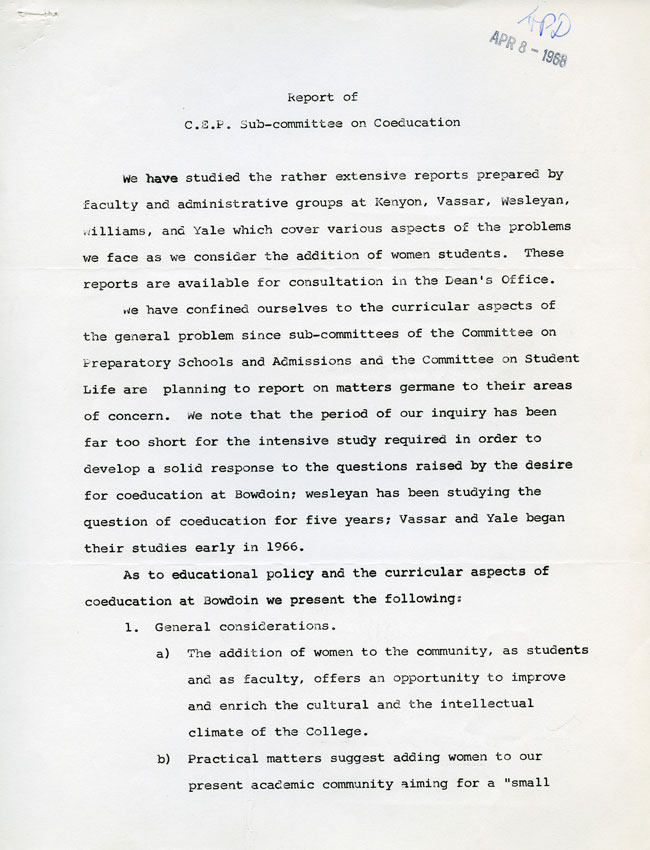
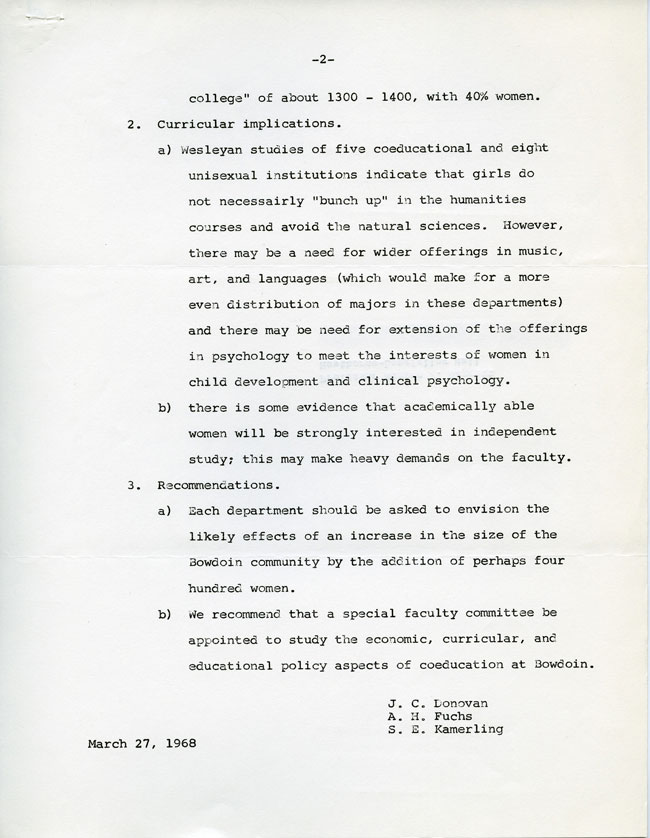
Report of C.E.P. Sub-committee on Coeducation

During the late 1960s and early 1970s, many single-sex colleges across the country began to consider transitioning into coeducational institutions. In 1969, Bowdoin became one of twelve colleges to participate in a Twelve College Exchange program that allowed male and female students to spend a semester to a full year studying at a college from which their sex had previously been excluded. Through the exchange program, the colleges involved hoped to learn more about the changes that would occur and the new facilities and/or provisions that would be necessary for the admission of predominantly female students, but in general, students of the opposite sex. Bowdoin considered and evaluated the many modifications required as a result of women’s potential admission by forming various sub-committees within, for example, the Committee on Preparatory Schools and Admissions, the Committee on Student life, and notably, within the Curriculum and Education Policy Committee (C.E.P.).

The report presented here (Document, SW, 31) is from the C.E.P. subcommittee on Coeducation. It addresses the general and specific curricular implications the entrance of women to Bowdoin could have based on the subcommittee’s reviews of “extensive reports prepared by the faculty and administrative groups at Kenyon, Vassar, Wesleyan, Williams, and Yale,” institutions that were all coeducational by 1970 and some of whom were members of the College Exchange.

According to this report, the C.E.P. subcommittee on Coeducation favored the admission of women to Bowdoin, asserting that women, “as students and as faculty” would “improve and enrich the cultural and intellectual climate of the College.” With regards to curricular implications, the subcommittee claims that, despite the finding that “girls do not necessarily ‘bunch up’ in the humanities courses and avoid the natural sciences,” it still might be necessary to give “wider offerings in music, art, and languages” and provide an “extension of the offerings in psychology to meet the interests of women in child development and clinical psychology.” In addition, they state that greater demands may be made on the faculty based on the evidence that “academically able women” are often very interested in independent study

Report of C.E.P. Sub-committee on Coeducation

Report of C.E.P. Sub-committee on Coeducation

Filed Under: Curriculum, Documents Tagged With: CEP, Coeducation, Curriculum and Education Policy, Report, Sub-committee on Coeducation, SW31

  • « Previous Page
  • 1
  • …
  • 3
  • 4
  • 5
  • 6
  • 7
  • …
  • 17
  • Next Page »

Categories

  • Athletics (9)
    • Documents (6)
    • Focus Group (1)
    • Oral History Interview (2)
  • Curriculum (8)
    • Documents (6)
    • Focus Group (1)
    • Oral History Interview (1)
  • Extracurriculars (10)
    • Documents (6)
    • Oral History Interview (3)
  • Prehistory (20)
    • Documents (18)
    • Oral History Interview (2)
  • Process (22)
    • Documents (12)
    • Focus Group (3)
    • Oral History Interview (7)
  • Social Life & Fraternities (20)
    • Documents (12)
    • Focus Group (3)
    • Oral History Interview (5)
  • Women’s Resource Center (8)
    • Documents (6)
    • Focus Group (1)
    • Oral History Interview (1)
  • Sources
  • Acknowledgments

Copyright © 2026 · research.bowdoin.edu · Powered by WordPress